History of the Black Madonna
From Saint Luke’s brush to the scarred face that became Poland’s protector, discover how a single image journeyed through centuries of suffering and miracle.
Inside the Free Chapter Download
Journey through centuries of devotion, loss, and rediscovery in the story of the Black
Madonna, She is a legendary icon that shaped nations and still inspires pilgrims today.

Origins of a Sacred Image
According to legend, Saint Luke painted Mary and the Christ Child on a tabletop from the Holy Family’s home. Hidden during persecution, the image became one of Christianity’s earliest symbols of hope and devotion.
Helena’s Holy Discovery
Three centuries later, Saint Helena’s pilgrimage to the Holy Land uncovered treasures long lost to time, including the True Cross and Saint Luke’s painting of Mary and the Christ Child. Brought to Constantinople, the image soon became a source of miracles, mercy, and healing for the faithful.
Scars and Survival
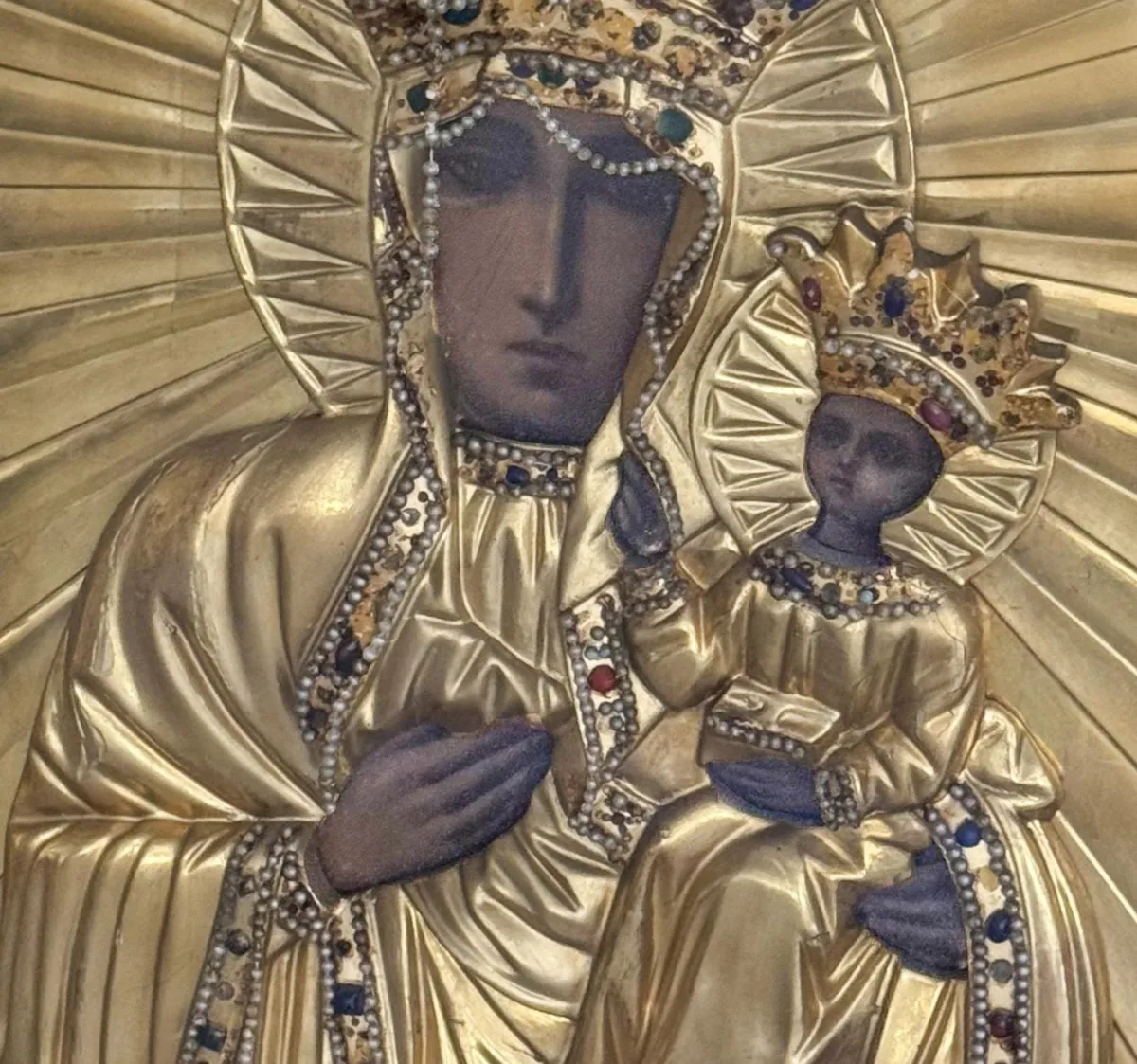
Fire darkened the faces of Mary and Jesus, and a later attack left slashes across the
Virgin’s cheek. Yet devotion only deepened. The scars became proof that holiness
endures through suffering and that faith, once wounded, can still shine with grace.
The Heart of Poland
At Jasna Góra, the Black Madonna became the guardian of a nation—watching over soldiers, inspiring courage, and comforting exiles. Her scarred, radiant face still draws pilgrims from around the world, a living testament to endurance, identity, and divine love.
"Faith is rarely efficient, but it is always patient."
— Walk the Pilgrim's Path
Download Your Free Excerpt
Her Face Was Darkened by Fire and the World Fell to Its Knees
Hidden for centuries and found by a sainted queen, the Black Madonna remains one of history’s most mysterious icons.
Enter your name and email below to receive your free chapter from Walk the Pilgrim’s Path.
Instant access to your PDF reflection guide. No spam, ever.

About Jeanette McDermott
Jeanette McDermott is a St. Louis–based author and photojournalist whose assignments have taken her to six continents, documenting where faith, ecology, and the human story converge. Her work has appeared in national and international publications.
With Walk the Pilgrim’s Path, she turns her lens homeward, inviting readers to see devotion as an everyday act of attention and care.
Ready to meet the Black Madonna?
Start with the origin story—St. Luke’s icon, Helena’s quest, violent assaults, and survival.
© 2025 Walk the Pilgrim's Path. All rights reserved.